ICP Ambassador Talks with Seval Guzelkilinc, International Federation of Red Cross
April 13, 2026
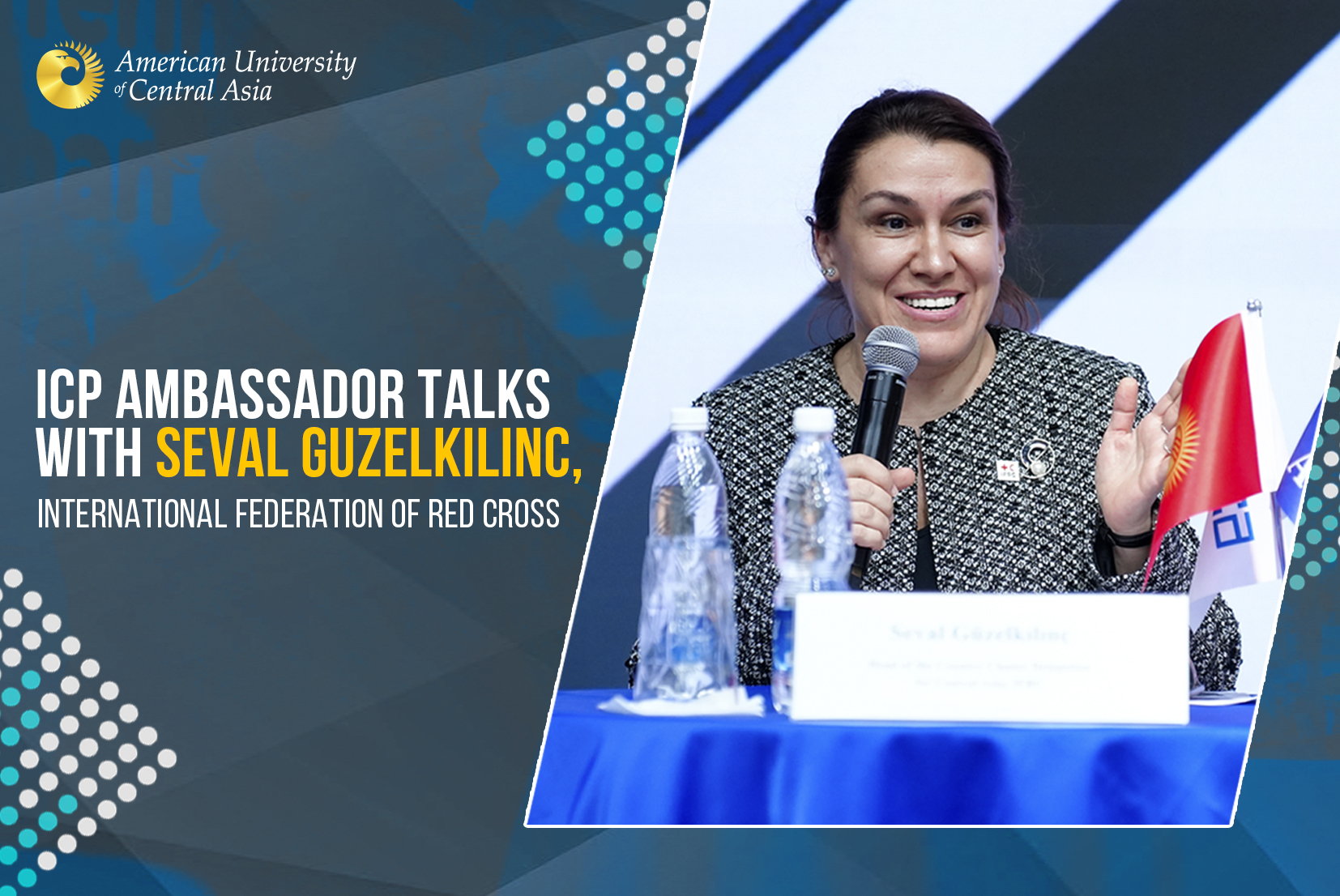
As part of the university’s ongoing efforts to engage students with global humanitarian initiatives, a guest lecture was delivered by Seval, a representative of the International Red Cross and Red Crescent Movement in Central Asia.
During her presentation, Seval shared insights into her professional journey within the Red Cross and Red Crescent network, highlighting her experience in community engagement and humanitarian response, particularly in providing psychosocial support to vulnerable populations. She emphasized that the Movement represents the world’s largest humanitarian network, dedicated to alleviating human suffering, addressing urgent needs, and supporting communities in times of crisis.
Miss Seval underscored the importance of volunteerism, noting that the organization operates as the largest global volunteering network. In light of the International Year of Volunteers, she encouraged students to actively participate in volunteer initiatives and contribute meaningfully to their communities.
The lecture also provided historical context, referencing Henry Dunant, a Swiss humanitarian and Nobel Peace Prize laureate. Dunant’s experience witnessing the aftermath of the Battle of Solferino led to the establishment of the Movement and the development of the Geneva Conventions, which define the rules of humanitarian conduct during armed conflicts.
Miss Seval explained the structure of the International Red Cross and Red Crescent Movement, which consists of three main components: the International Committee of the Red Cross (ICRC), the National Societies, and the International Federation of Red Cross and Red Crescent Societies (IFRC). Together, these entities coordinate global humanitarian efforts.


Special attention was given to the official emblems of the Movement — the Red Cross, Red Crescent, and Red Crystal — which are internationally protected symbols and serve as neutral, non-religious identifiers of humanitarian assistance.
The speaker also outlined the seven Fundamental Principles guiding the Movement, describing them as the core framework underpinning all activities worldwide. She further highlighted the strategic priorities of the International Federation of Red Cross and Red Crescent Societies under its Strategy 2030, including addressing climate and environmental crises, responding to evolving disasters, and promoting health and well-being.
In addition, Seval discussed initiatives aimed at youth engagement in Central Asia, emphasizing collaboration between the Red Cross and Red Crescent and academic institutions to empower young people.
The lecture concluded with remarks from Dr. Saniia Toktogazieva, who thanked the speaker for her informative and engaging presentation. She encouraged students to explore volunteering opportunities and expressed hope for continued collaboration between the university and the organization.
The session ended with an interactive Q&A segment, during which students asked about pathways to becoming volunteers and discussed the current operations of the Movement in regions such as Dagestan, Russia, and many more